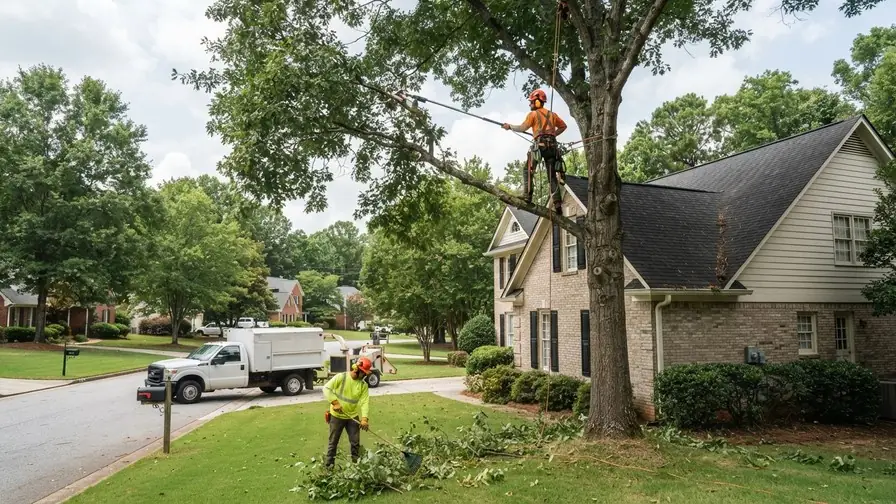
The ideal time to deal with a weak limb is before the wind finds it. A little trimming ahead of storm season can prevent a lot of cleanup later. This article covers what to trim, how it is done and how to time it for Roswell yards like those in Martin's Landing.
What should be trimmed before storm season?
Before storm season, focus on dead branches, limbs that hang over the roof or driveway, broken or cracked limbs, and branches that cross and rub. Thinning a dense crown can also let wind pass through more easily. These cuts lower the chance of limbs breaking near the house. Trimming should remove only what is needed, with clean cuts outside the branch collar.
Priorities >>
- Dead wood, overhangs, cracks, crossing limbs.
Avoid >>
- Topping or removing too much of the crown.
What to Look For
Walk around each tree near the house and look up. Dead branches stand out because they have no leaves or bark is peeling.
Note limbs that touch or hang low over the roof, gutters, driveway or power service drop. Look for branches with cracks, splits or old wounds. Watch for limbs that cross and rub against each other, since the rubbing can wear through bark and weaken them. A dense crown that blocks light and wind may also benefit from thinning.
How Pre-Storm Trimming Is Done
Deadwood removal comes first. The crew cuts dead branches back to living wood or the trunk.
Overhanging limbs are shortened or removed to give the roof and driveway clearance. Crown thinning takes out selected inner branches so wind can pass through the canopy instead of pushing against a solid sail. Each cut is made just outside the branch collar. Good crews avoid topping, which leaves weak regrowth that breaks more easily in storms. Pole saws handle low limbs, while climbing or a bucket truck reaches higher ones.
Timing Your Trim
Dead or damaged limbs can be removed at any time of year.
General thinning and clearance are often done in the cooler months, when it is easier to see the structure. Booking before the stormy part of the year gives the most benefit.
Getting Ahead of the Weather
A well-timed trim can save you from storm damage later. Call us, tell us which trees you are concerned about, and we will connect you with a local crew who can trim them and quote the work.
Questions Roswell Homeowners Ask
Does trimming really reduce storm damage?
Trimming can reduce storm damage by removing dead and weak limbs before they break and by thinning dense crowns so wind passes through. It does not make a tree storm proof, but it lowers the chance of limbs falling on the house, cars or people.
What is crown thinning?
Crown thinning is the selective removal of some inner branches to reduce density in the canopy. It lets light and wind pass through more easily, which lowers the load on the tree in storms. Good thinning keeps the tree's natural shape and removes only a modest amount.
Why is topping a tree bad?
Topping, cutting large limbs back to stubs, is bad because it removes too much of the crown, stresses the tree and causes many weak shoots to grow from the cuts. Those shoots break easily in storms. Proper trimming makes smaller cuts at the right points.