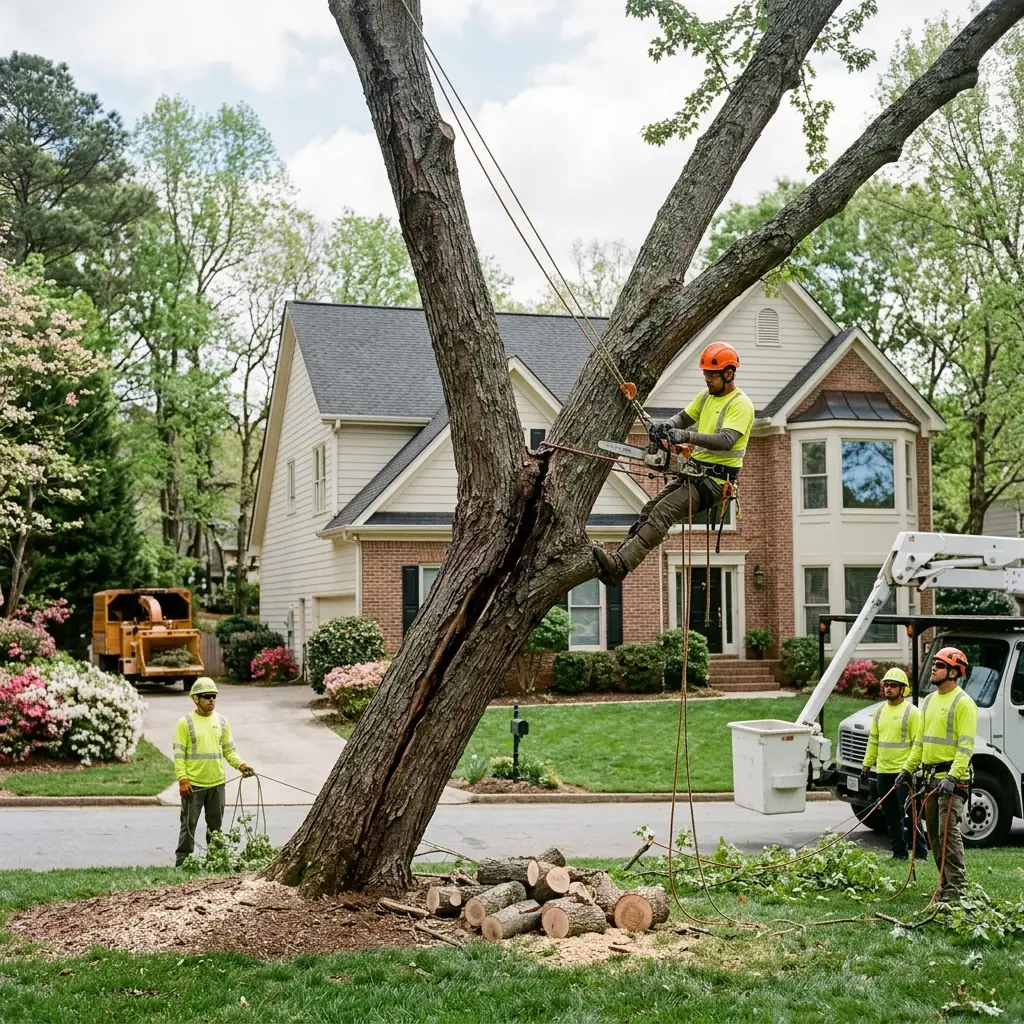
A hazardous tree is not just an old or ugly one. It is a tree with a real chance of failing and a real target underneath. Spotting the difference matters, because removal near a home takes planning. Here is what to look for and how we connect you with a crew who handles risky trees.
Signs a Tree Has Become Risky
Start at the base. Mushrooms, soft or crumbling wood, and cavities near the root flare suggest decay inside. Cracks in the soil or a raised mound on one side can mean the root plate is lifting.
Move up the trunk. Long vertical cracks, seams where two trunks meet in a tight V, and bark that has fallen away to expose dry wood are all concerns. In the crown, look for large dead branches, limbs that broke but stayed hung up, or a canopy that thinned suddenly. Finally, check for lean. A tree that has always leaned gently is different from one that began to tilt after a storm, which is a sign to have it checked.
Why Hazardous Trees Need a Careful Plan
A weak tree may not tolerate the normal forces of climbing and rigging. Cutting in the wrong order can shift weight onto a cracked section and cause it to fail early.
That is why crews often work from a bucket truck or bring in a crane when a tree is badly compromised, and why they take nearby trees under the canopy into account. Each cut is planned so wood moves away from the house and into a clear drop zone. The provider explains the method in the quote, so the work day holds no surprises.
After the Tree Is Down
Once the tree is on the ground, the crew cuts it into pieces, chips the brush and hauls the wood if that is part of the agreement.
Stump grinding can be added if you plan to reuse the space. It is also worth asking the provider to look at neighboring trees, since a tree with root rot or storm damage sometimes has neighbors with the same issue. In Roswell, removing a tree larger than 3 inches in diameter needs a city Tree Removal Permit, so ask how that is handled for your job.
Dealing With a Risky Tree
If a tree near your home is cracked, leaning or decaying, act before another storm settles it for you. Call us and we will connect you with a local crew who can inspect the tree, explain the risk in plain language and quote a safe removal.
Questions Roswell Homeowners Ask
How do I know if a tree is hazardous?
A tree is likely hazardous if it has deep cracks, a new lean, large dead limbs, fungus at the base or roots lifting out of the soil, and it could hit a house, car or play area if it fell. A provider can confirm the risk with an on-site inspection.
How is a risky tree removed without hitting the house?
A risky tree is removed in small sections from the top down, with pieces lowered on ropes or lifted away by a crane, so nothing falls toward the house. Crews often use a bucket truck instead of climbing a weak tree, and plan every cut in advance.
How soon should a hazardous tree come down?
A hazardous tree should come down as soon as it can be scheduled, especially if it leans toward the house or has a fresh crack after a storm. Waiting through another windy season raises the chance it fails on its own and causes damage.