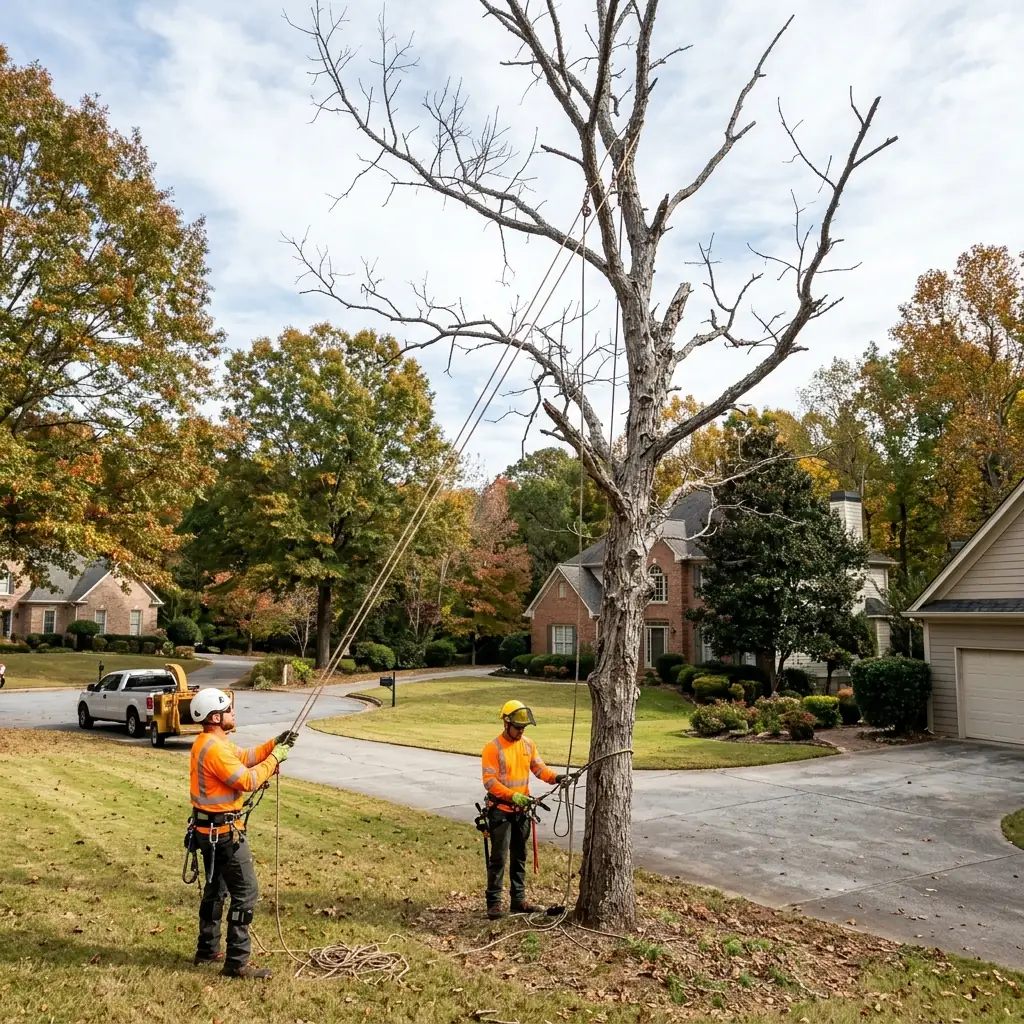
Trees die for many reasons: drought, root damage, insects or simply age. Whatever the cause, a dead tree does not stay put forever. This page covers how to tell a tree is dead, why it is riskier to remove than a living one, and how we connect you with the crew who can take it down.
How to Tell a Tree Has Died
In spring and summer the clearest sign is a crown with no leaves, or only a few clusters on the lower branches. In winter, look closer. Twigs that snap dry instead of bending, bark that peels away in large patches, and fungus or mushrooms growing near the base all suggest the tree is no longer alive.
Pines often show it by turning brown from the top down. Hardwoods may leaf out weakly one year and not at all the next. A scratch test on a small twig helps too: green tissue under the bark means life, brown and dry means it has died. If you are not sure, the provider can look at the tree and tell you what they see.
Why Dead Trees Take Extra Care
Living wood bends. Dead wood snaps. As a tree dries out, its limbs lose the flexibility that lets climbers and rigging work safely. A branch that would hold a rope on a healthy tree may break off when loaded.
Because of that, crews often avoid climbing a tree that has been dead a long time. They may use a bucket truck to cut from outside the tree, or in harder cases a crane to lift sections away. The plan depends on how far the decay has gone. Removing a tree soon after it dies usually means more options and less need for heavy equipment, which is one reason not to wait.
Planning the Removal
The provider starts by walking around the tree and noting what is underneath: the roof, a fence, the driveway, power lines or garden beds. They then choose a method, whether that is felling into open space, cutting in sections from a bucket, or lowering pieces on ropes.
Brush is chipped and the trunk is cut into rounds for hauling or stacking. Ask about stump grinding if you plan to replant or reseed the spot. Any tree over 3 inches in diameter needs a Roswell Tree Removal Permit, so ask the provider how the permit is handled on your lot before a work date is set.
Taking Care of a Dead Tree
A dead tree near the house is among the top reasons Roswell homeowners call us. Reach out, tell us where it stands, and we will connect you with a local crew who can look at it and give you a written plan and price.
Questions Roswell Homeowners Ask
How soon should a dead tree near the house come down?
A dead tree near the house should come down soon, ideally before the next windy season, because dead limbs grow brittle and can drop without warning. Waiting also lets decay spread, which can make the removal harder and may call for a bucket truck or crane.
Why is a dead tree harder to remove safely?
A dead tree is harder to remove because dry wood snaps instead of bending, so limbs may not hold a climber or rigging line. Crews often work from a bucket truck or use a crane for trees that have been dead a long time, which changes the plan and price.
What signs show a tree is dead or dying?
Common signs are a crown with no leaves in the growing season, bark peeling off in sheets, brittle twigs that snap dry and fungus near the base. Pines often turn brown from the top down. If you are unsure, the provider can inspect the tree in person.