Pines are some of the tallest trees on Roswell lots, and their height is exactly why they worry homeowners. A pine with a thin crown, a fresh lean or a split after a storm is a tree worth having looked at before the next round of wind. This page explains how pine removal works and how we connect you with the provider who does it.
Why Tall Pines Become a Problem
Pines grow straight and fast, and most of their weight sits high in a small crown. That shape catches wind like a sail. When the roots sit in soaked clay after days of rain, a strong gust can push the whole tree over or snap the trunk partway up.
Other warning signs are easier to spot from the ground. Needles that turn brown from the top down, bark that flakes off in sheets, sap running from many small holes, or a sudden lean all point to a tree that is weakening. Pines that lose their top in a storm rarely recover, and the broken stub can rot quickly. None of these signs means the tree will fall tomorrow, but each is a reason to get a trained eye on it soon.
How the Crew Takes a Pine Down
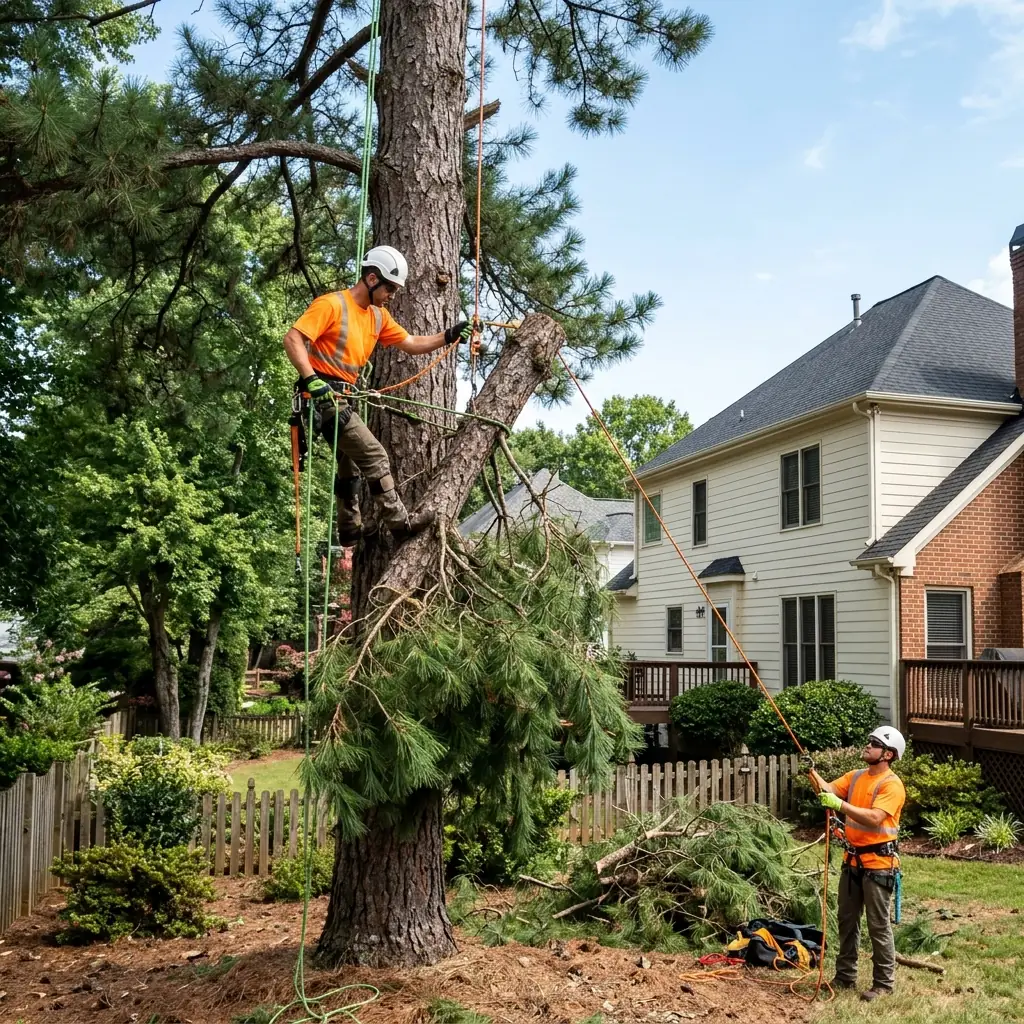
Where there is open lawn in the direction of the lean, a pine can sometimes be felled in one piece. Near a house, deck or fence, that is rarely safe. Instead, a climber or a bucket truck works from the top down, removing limbs first and then cutting the trunk into short lengths that are lowered on rigging lines.
This sectional method takes longer, but it keeps heavy wood off the roof and away from gutters. When the remaining trunk is short enough, it is dropped into a clear landing zone. The crew watches for dead wood, which can snap without warning, and adjusts the plan if the pine turns out to be hollow. Every step is decided on site, after the tree has been inspected up close.
What Happens to the Wood
Pine produces a lot of material. Branches and needles usually go through a chipper on the spot. The trunk is cut into rounds that can be hauled away or stacked at the edge of the yard if you want to keep them.
Pine is soft and resinous, so many homeowners prefer to have it removed rather than burned in a fireplace. Tell the provider which option you want before the quote is written, because hauling heavy rounds changes the time and equipment the job needs. Stump grinding is usually a separate line on the quote, and you can decide on it after the tree is down.
Getting Your Pine Looked At
If a pine on your property is leaning, thinning or broken, call us and we will connect you with the local provider who serves your part of Roswell. They will look at the tree, explain how it would come down, and give you a written price before any cutting starts.
Questions Roswell Homeowners Ask
Why do tall pines fail in storms?
Tall pines fail in storms because most of their weight sits high in a narrow crown that catches wind. When the ground is saturated, the roots lose grip, and a strong gust can tip the tree or snap the trunk. Pines that are already declining, with brown needles or loose bark, are more likely to break.
Can a pine be removed without a crane?
Most pines can be removed without a crane by climbing the tree and lowering it in sections with ropes. A crane is usually only brought in when the tree hangs over the house, is too weak to climb, or has no safe place to lower pieces. The provider decides this after seeing the site.
What happens to the pine logs after removal?
The pine logs are usually cut into rounds and hauled away, or stacked on your property if you ask to keep them. Smaller branches are chipped on site. Let the provider know which you prefer before the quote is written, since hauling heavy rounds affects the price.